The switch to diamond wire: what changed in wafer cutting
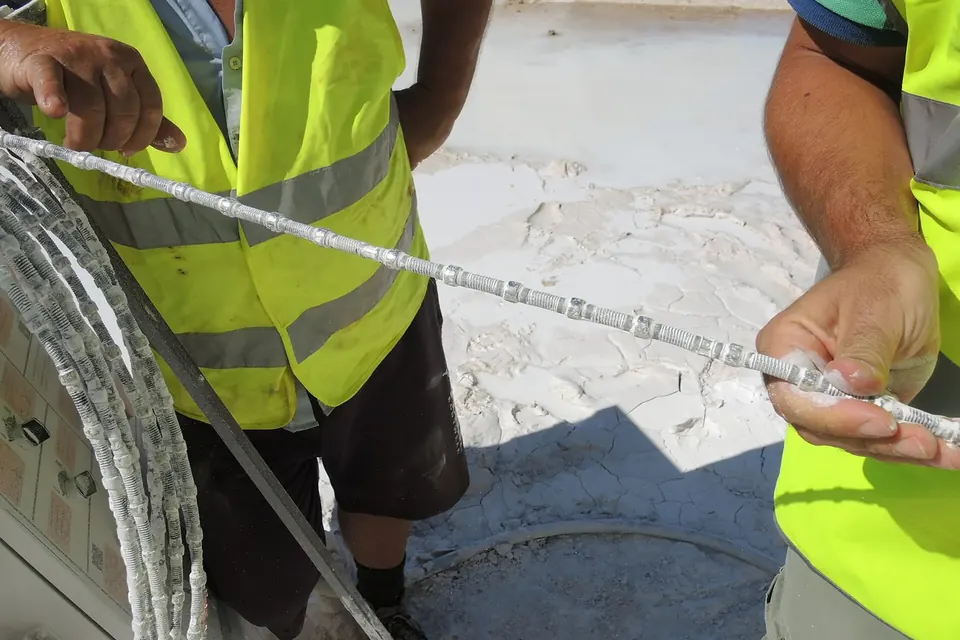
In diamond wire sawing the cutting grain no longer floats loose in a glycol slurry; it is fixed to the wire. That apparently small difference reshaped machines, consumables, wafer surfaces and the whole circular economy around wafer cutting.
What a diamond wire is
A diamond wire has a thin, high-strength steel core with diamond grains held by a bond, often electroplated nickel, or by resin. The grains protrude from the bond and scratch the silicon. Unlike in the slurry process, the wire carries the tool itself; the liquid is only there to cool, lubricate and remove debris.
A Fraunhofer THM conference paper gives core diameters of 60 to 70 µm for diamond wires and highlights short process times and the use of water with about 2 % additives as a cheap coolant (Kaden et al., 35th EU PVSEC, 2018). A 2025 review describes the trend to even finer wires below 35 µm, which wear faster and break more often (Ge et al., Materials Science in Semiconductor Processing 203, 2026).
Slurry versus diamond wire
| Aspect | Slurry process | Diamond wire |
|---|---|---|
| Abrasive | Loose SiC grains in PEG | Diamond, fixed to the wire |
| Wire diameter (examples from the sources) | 180 µm (classic), 115 µm (structured) | 60–70 µm core (2018), trend below 35 µm |
| Liquid | High-viscosity glycol | Water with a few per cent additives |
| Removal | Rolling, indenting | Scratching |
| Sub-surface damage | Reference | About half as deep (per UNSW) |
| Waste stream | SiC-glycol slurry with silicon and iron | Aqueous suspension with silicon, little foreign grit |
Sources: PV Manufacturing (UNSW); Kaden et al. 2018; Ge et al. 2026.
Why the industry switched
According to the UNSW teaching platform, equipment and wire are more expensive for diamond wire sawing, but total cost of ownership is much lower; the advantages it lists are faster cutting, the possibility of recycling silicon, and much lower kerf loss (PV Manufacturing, "Wafering"). Photovoltaics then switched entirely, first for monocrystalline and later for multicrystalline silicon.
How fast that went shows in older forecasts: the 2016 edition of the International Technology Roadmap for Photovoltaic (ITRPV) still expected diamond wire to take around ten years to reach a market share of about 60 % for multicrystalline silicon (TaiyangNews on ITRPV 2016). The change came much faster.
Consequences for the wafer surface
A scratching grain leaves a different surface from a rolling one. Diamond-sawn wafers show fine scratch lines and areas of ductile-mode removal; slurry-sawn wafers have a more uniformly pitted surface. That matters because the surface is then textured to reduce reflection.
- Monocrystalline wafers are textured in alkaline solutions; processes had to be adapted to the new surface.
- Multicrystalline wafers were textured in acid. The transition was harder here and, according to UNSW, prompted research into alternative textures such as "black silicon".
Consequences for consumables and recycling
Less SiC, less glycol
With diamond wire, photovoltaics no longer consumes large amounts of SiC grit and glycol. The market for SiC-glycol slurry reprocessing shrank where it had been biggest. Slurry processes remain where they have technical advantages; the 2018 Fraunhofer paper notes that slurry processes still held a high share in microelectronics.
A new waste stream
Instead, an aqueous suspension of coolant and very fine silicon kerf is produced. It contains little foreign grit but some metal from the wire bond. Yang and co-authors write that recycling and reuse of kerf silicon became more realistic with diamond wire because of the lower contamination (Waste Management 84, 2019). More in kerf loss and silicon recovery.
Hydrogen as a safety issue
Water-based coolants have a drawback: freshly exposed silicon reacts with water and releases hydrogen. A patent application on wire-sawing fluids calls the hydrogen a possible explosion hazard in production and notes that gas bubbles disturb the distribution of fluid on the wire web; it proposes additives that suppress hydrogen formation (US 2011/0240002 A1). Another application describes glycol additives that form a protective film to slow hydrogen formation (WO 2014/086024 A1). For a plant, this feeds directly into explosion-protection zoning and ventilation design.
Remaining challenges
- Wire wear and breakage as wires get ever thinner.
- Vibration: a Shandong University study found that higher wire tension and shorter free wire spans reduce additional kerf loss, while it rises slightly with wire speed (reported by pv magazine, 17 September 2025).
- Saw marks a few micrometres deep, which according to Ge et al. can noticeably degrade device performance.
- Thinner wafers below 150 µm, which become more fragile.
 Sawing & Wafers
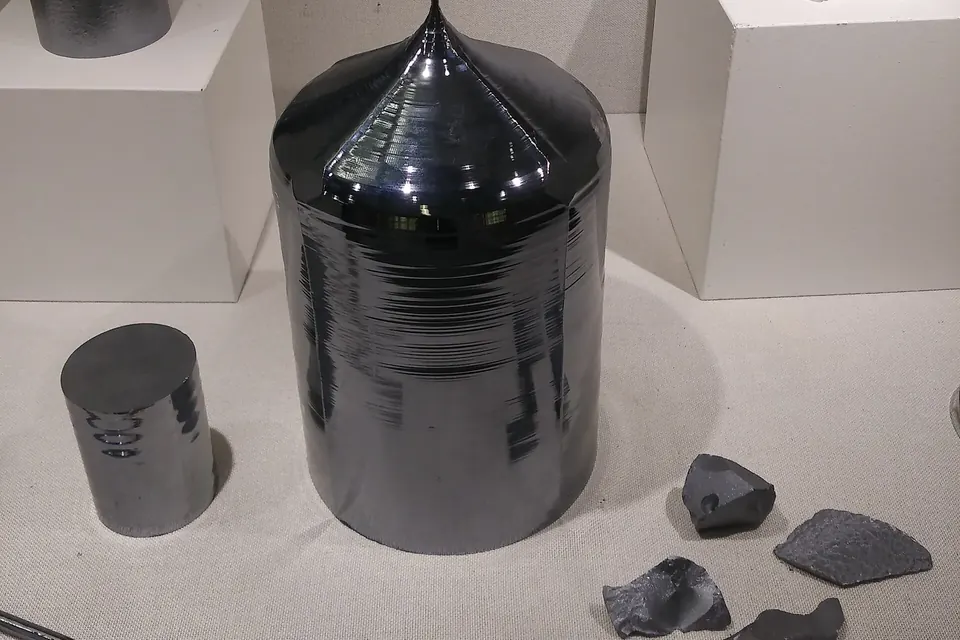
How multi-wire sawing works
Wire web, wire guides and feed: how a silicon ingot becomes hundreds of wafers in a single pass.
 Slurry & Recovery
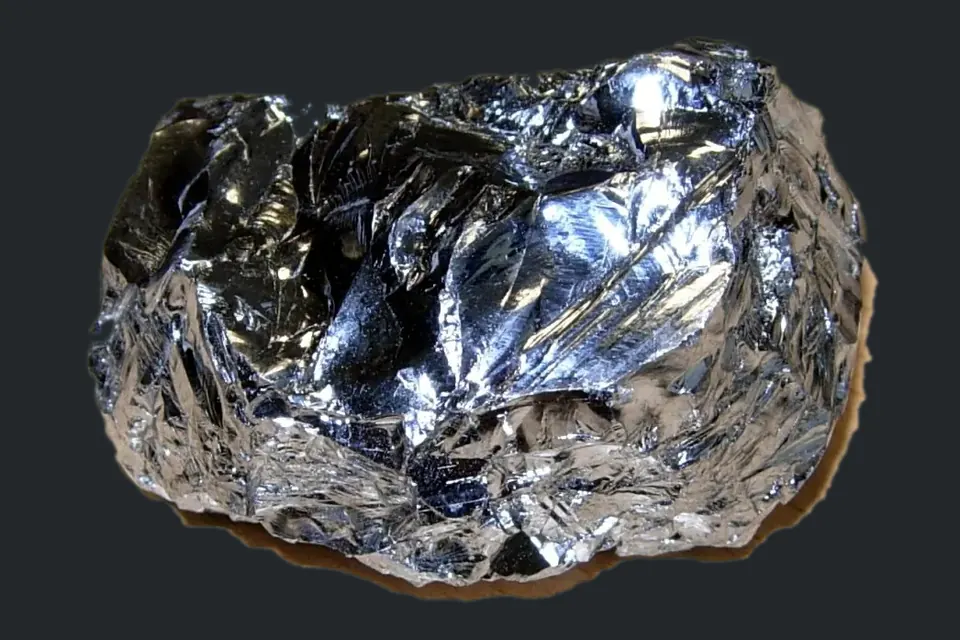
Kerf loss and silicon recovery
How much silicon is lost in the cut, why it is hard to win back and which recovery routes research describes.
 Silicon Carbide
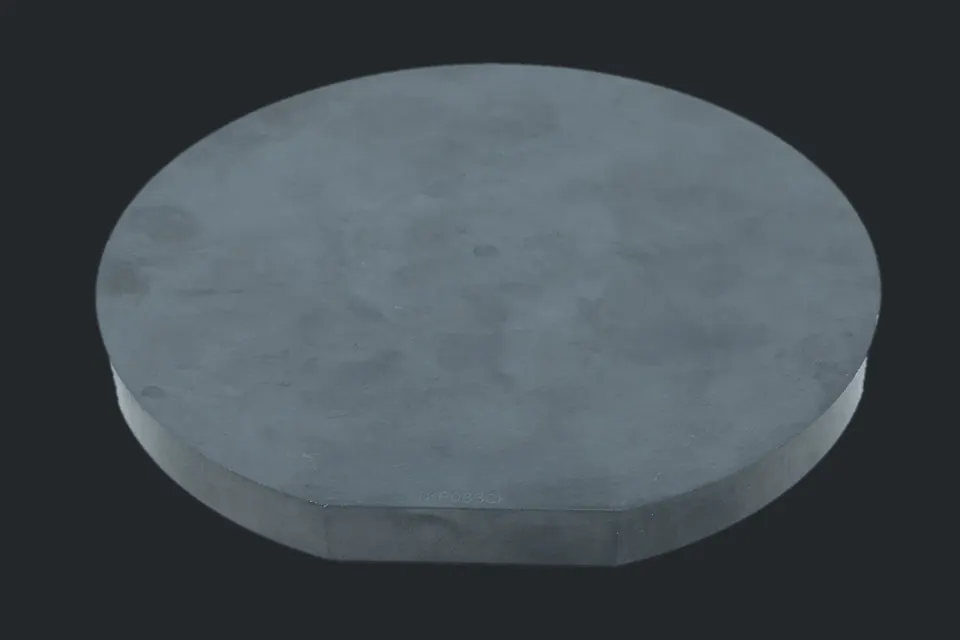
SiC in power electronics
Why 4H-SiC suits power semiconductors, and why sawing its very hard crystals is a discipline of its own.