Kerf loss and the recovery of silicon from sawing waste
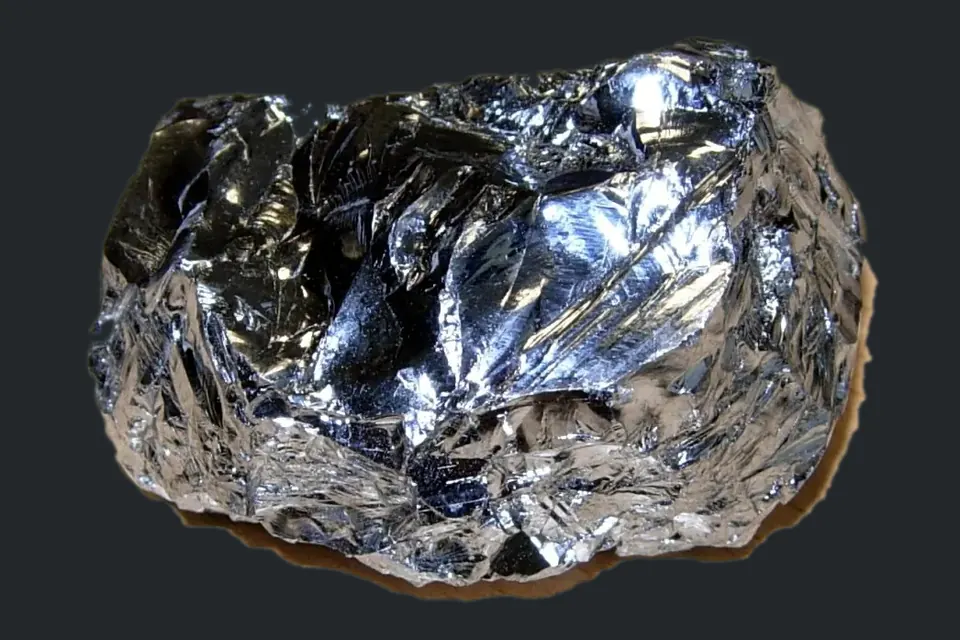
The wire eats its way through the crystal as a narrow groove. What was in that groove is high-purity silicon that has already been refined, melted and crystallised, and it ends up as ultrafine powder in the sawing sludge. The groove is the kerf; the lost material is the kerf loss.
How large the loss is
The size of the loss depends mostly on wire diameter, then on grit size and wire vibration. Some sourced values:
| Process | Value | Source |
|---|---|---|
| Slurry, 180 µm steel wire | About 200 µm kerf per cut | PV Manufacturing (UNSW) |
| Slurry (ITRPV 2016) | About 150 µm | TaiyangNews on ITRPV 2016 |
| Diamond wire (ITRPV 2016) | About 125 µm, potential of about 85 µm within ten years | Same |
Relative to the crystal, these are large shares. Patents on silicon recovery cite losses of about 25 to 50 % of the ingot (US 8,528,740) or around 40 to 50 % of the silicon during wafering (EP 2 274 767 A2). The share follows from the ratio of kerf to wafer thickness plus kerf: the thinner the wafer, the larger the relative loss for the same kerf.
Worked example: with wafer thickness d and kerf k, each wafer costs a fraction k / (d + k) of the brick as kerf. Using the UNSW value for classic slurry sawing (kerf about 200 µm) and an assumed wafer thickness of 180 µm, that is 200 / 380, a little over half. The wafer thickness here is an assumption for the calculation, not a figure from the source.
Why silicon is hard to get back from slurry
In classic slurry sawing the silicon is mixed with SiC grit, glycol and iron. Yang and co-authors describe slurry kerf as sitting in a polyethylene glycol fluid that contains impurities such as iron from the wire and SiC abrasive (Waste Management 84, 2019). Four difficulties combine:
- Separating SiC from silicon: both are fine solids of similar size; SiC is an unwanted impurity in silicon because it brings in carbon.
- Removing metals: iron makes it hard to regain the original purity of the ingot, according to a patent (EP 2 274 767 A2).
- Oxidation: fine silicon particles have an enormous surface area that oxidises; oxygen is a major quality problem.
- Handling ultrafines: one patent names separating and filtering sub-micrometre particles as one of the main problems (EP 3 584 355); another warns of dust explosions when handling ultrafine silicon.
Older patent literature sums it up: there were workable recovery processes for cutting fluid and most of the SiC grit, but for a long time not for the silicon powder (US 8,231,006).
What diamond wire changes
Diamond wire sawing uses no SiC grit, and the coolant is water-based, so the kerf carries fewer foreign substances. Yang et al. showed in 2019 that acid leaching can purify this kerf until metals (mainly nickel from the wire bond) fall to a few ppmw, boron and phosphorus below 1 ppmw and carbon to a few hundred ppmw, with oxygen below 5 wt %. In the authors' assessment the purity was not yet enough for use as feedstock in ingot casting, but comparable to materials already used in silicon casting.
Recovery routes
Depending on the purity achieved, recovered silicon can go to several destinations:
- Back into crystallisation: the most demanding route because purity requirements are high.
- Chemical conversion: silicon as feedstock for chlorosilanes such as trichlorosilane, from which high-purity silicon can be made again; Neesse et al. list trichlorosilane among recycling approaches (Eurasian Physical Technical Journal 9 (2), 2012).
- Lower-purity uses: for example in metallurgy, where silicon is an alloying element.
- Energy: silicon reacts with water and releases hydrogen. A 2025 paper studies how this hydrolysis can be used deliberately to produce hydrogen from diamond-wire sawing waste (Molecules, 2025).
Silicon metal is listed as a strategic raw material under the EU Critical Raw Materials Act, which gives recovery from production scrap a policy dimension as well; see critical raw materials and silicon.
How recovery is judged
Three quantities decide whether recovery pays off: the purity reached (especially metals, dopants such as boron and phosphorus, carbon and oxygen), the silicon yield, and the energy and chemicals needed for separation and purification. Yang et al. use exactly these impurity classes as criteria.
Lose less rather than recycle more
The most effective lever is still to lose less: thinner wires, steadier wire guidance and more precise processes. A review describes wires below 35 µm as the current direction of development (Ge et al. 2026). Every micrometre less kerf is silicon that never needs reprocessing. For the slurry process, slurry reprocessing at least keeps grit and glycol in the loop.
 Slurry & Recovery
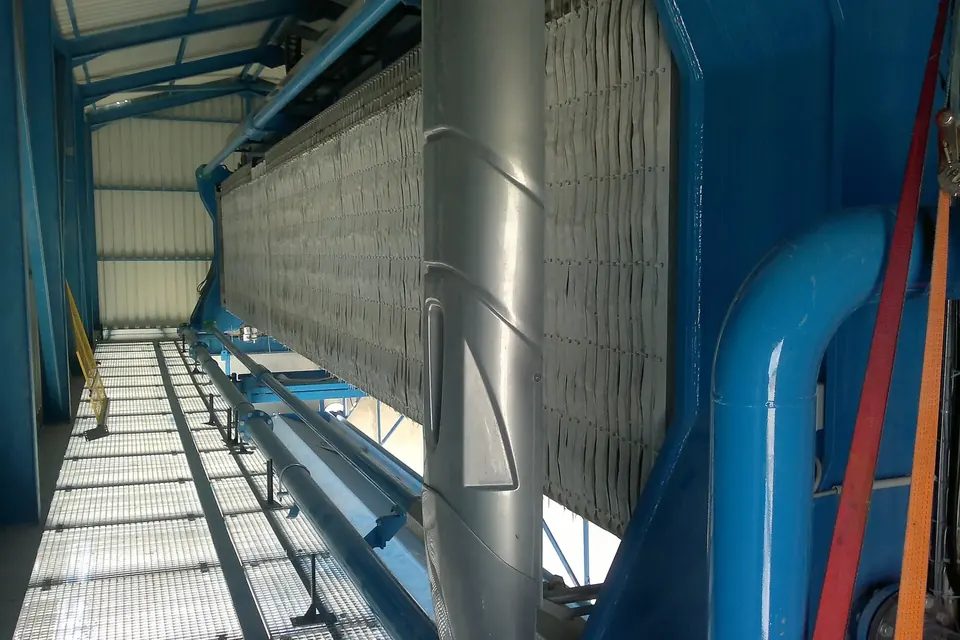
Slurry reprocessing, step by step
Centrifuges, hydrocyclones, etching and evaporation: the five basic steps of slurry recovery.
 Sawing & Wafers
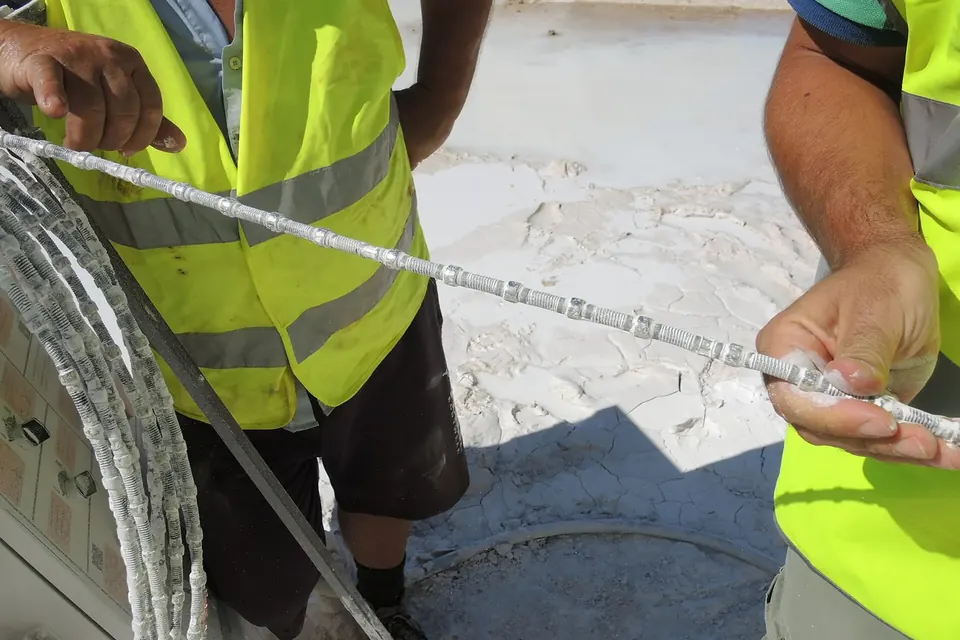
The switch to diamond wire
Fixed abrasive, thinner wire, water instead of glycol, and what that meant for wafer surfaces and recycling.
 Industry & Policy
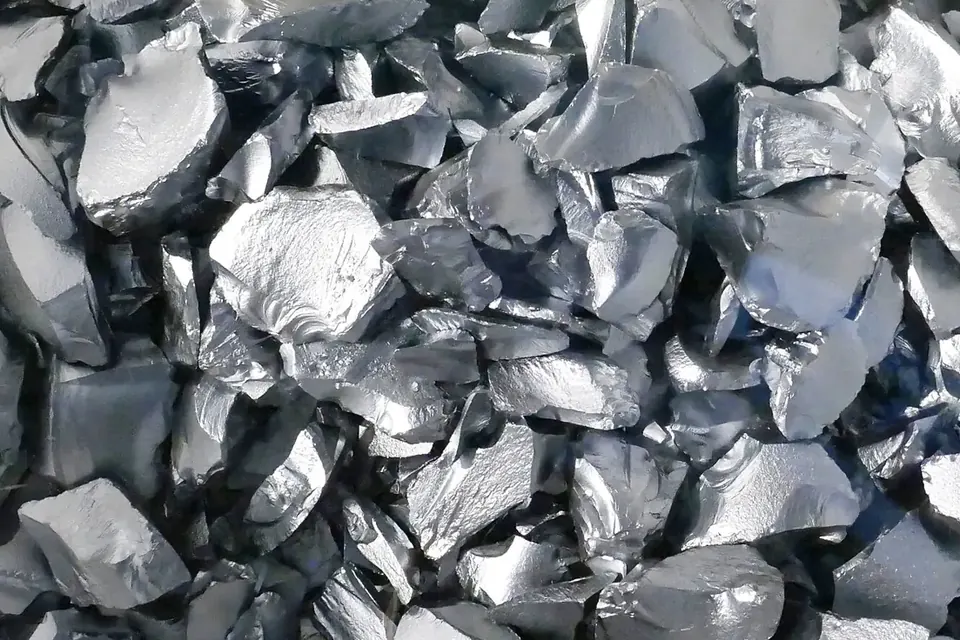
Critical raw materials and silicon
Silicon metal, gallium and germanium under the EU Critical Raw Materials Act: benchmarks, permits and supply risk.