Recycling solar modules and wafer-production waste in the EU: WEEE rules and the circular economy
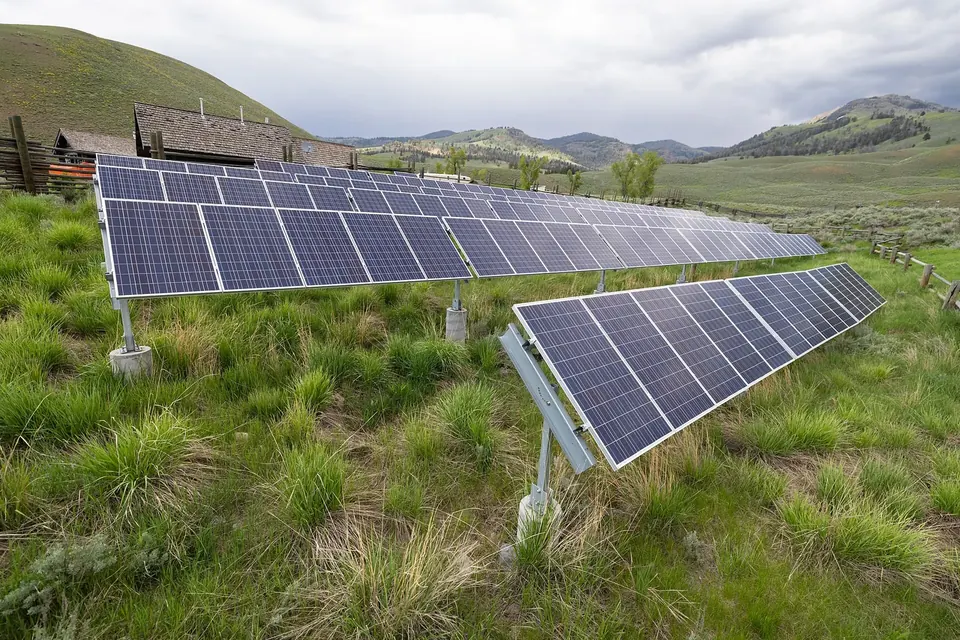
Circularity in the solar and semiconductor chain happens at two ends. At the start, in the factory, sawing slurry, kerf silicon and process chemicals can be kept in the loop. At the end, after decades on a roof or in a field, the module itself becomes waste. In the EU, the second end is governed by the WEEE Directive, which has covered photovoltaic panels since 2012.
Photovoltaic panels in the WEEE Directive
Directive 2012/19/EU on waste electrical and electronic equipment (WEEE) brought photovoltaic panels into its scope. In the original category list, category 4 was named "consumer equipment and photovoltaic panels" (Annex I). Since 15 August 2018, the Directive uses six broader categories, and photovoltaic panels are listed under category 4, large equipment (Annex IV) (text as reproduced on legislation.gov.uk, Annex IV).
Being in scope means extended producer responsibility: whoever places panels on the EU market, as manufacturer or importer, must finance the collection, treatment and recovery of the waste panels, register in each Member State where it sells, and report the quantities placed on the market. National implementation varies, for instance in how collection is organised and whether panels from households and from commercial installations are treated differently.
Recovery targets
Annex V of the Directive sets minimum recovery targets per category, measured as the weight entering recovery or recycling facilities relative to the weight separately collected:
| Period | Category covering PV panels | Recovered | Prepared for re-use and recycled |
|---|---|---|---|
| 15 Aug 2015 to 14 Aug 2018 | Category 4 (Annex I) | 80 % | 70 % |
| From 15 Aug 2018 | Category 4, large equipment (Annex III) | 85 % | 80 % |
Source: Directive 2012/19/EU, Annex V, Parts 2 and 3 (text).
These are mass-based targets. Because glass and aluminium frames dominate the weight of a crystalline-silicon module, they can be met largely by recovering glass and frames, without necessarily recovering the silicon or silver in the cells. That is the main criticism of weight-based targets for PV, and the reason why much research focuses on recovering the high-value materials as well.
The 2024 amendment
In January 2022 the Court of Justice of the EU, in case C-181/20, declared Article 13(1) of the Directive invalid in so far as it made producers responsible for photovoltaic panels placed on the market between 13 August 2005 and 13 August 2012, because that retroactive effect was not justified. Directive (EU) 2024/884 amended the WEEE Directive accordingly: producer responsibility for PV panels applies to panels placed on the market after 13 August 2012. The amendment entered into force in April 2024, had to be transposed by 9 October 2025, and requires the Commission to assess the need for a broader revision of the Directive (pv magazine, 6 March 2024).
How much waste is coming
The first global projection of PV panel waste, published by IRENA and the IEA Photovoltaic Power Systems Programme in 2016, estimated cumulative waste of 60 to 78 million tonnes by 2050, depending on whether panels reach their full lifetime or fail early, and put the potential value of recoverable materials at more than USD 15 billion by 2050 (IRENA and IEA-PVPS, End-of-Life Management: Solar Photovoltaic Panels, 2016). Because module volumes installed since then have far exceeded the assumptions of the time, the projection is best read as a lower order of magnitude, and newer IEA-PVPS Task 12 reports should be consulted for current estimates.
How a module is taken apart
A crystalline-silicon module is a laminate: front glass, an encapsulant film, the cells with their metal contacts, another encapsulant layer and a backsheet, held in an aluminium frame with a junction box. Recycling usually proceeds in stages:
- Removing frame, cables and junction box: mechanical, with high-quality aluminium and copper as output.
- Separating glass from the laminate: by mechanical, thermal or chemical delamination. The simplest plants shred the whole laminate and recover a mixed glass fraction; more elaborate processes aim to keep the glass clean enough for flat-glass production.
- Recovering cell materials: silver, copper and silicon are separated by chemical or thermal processes. This is the step with the highest value and the most process development.
The purity of recovered silicon faces the same questions as silicon from sawing waste: metals, dopants, carbon and oxygen decide whether it can return to crystallisation or only to lower-grade uses (see kerf loss and silicon recovery).
Circularity inside the factory
Long before a module reaches end of life, wafer and cell production generates its own material streams. Spent sawing slurry was historically the largest, and its reprocessing into reusable silicon carbide and glycol is one of the oldest examples of industrial circularity in this chain (see why sawing slurry is recycled and how it is reprocessed). With diamond wire, the focus has moved to recovering silicon kerf and coolant. In chip fabs, the main loops are water reclaim and the recovery of chemicals and gases.
The legal frame for these production residues is the Waste Framework Directive 2008/98/EC, with its waste hierarchy and its criteria for by-products and end-of-waste status, which decide whether a recovered stream can be sold as a product rather than handled as waste. The Chips Act also counts improved recyclability and reduced production inputs among the innovations that can make a fab "first-of-a-kind" (Commission guidance, OJ C/2024/4911).
Raw-material policy as a driver
Recycling is no longer only a waste question. Under the Critical Raw Materials Act, silicon metal is a strategic raw material, and the Act sets a benchmark for recycling to cover a quarter of the EU's annual consumption of strategic raw materials by 2030. See critical raw materials and silicon.
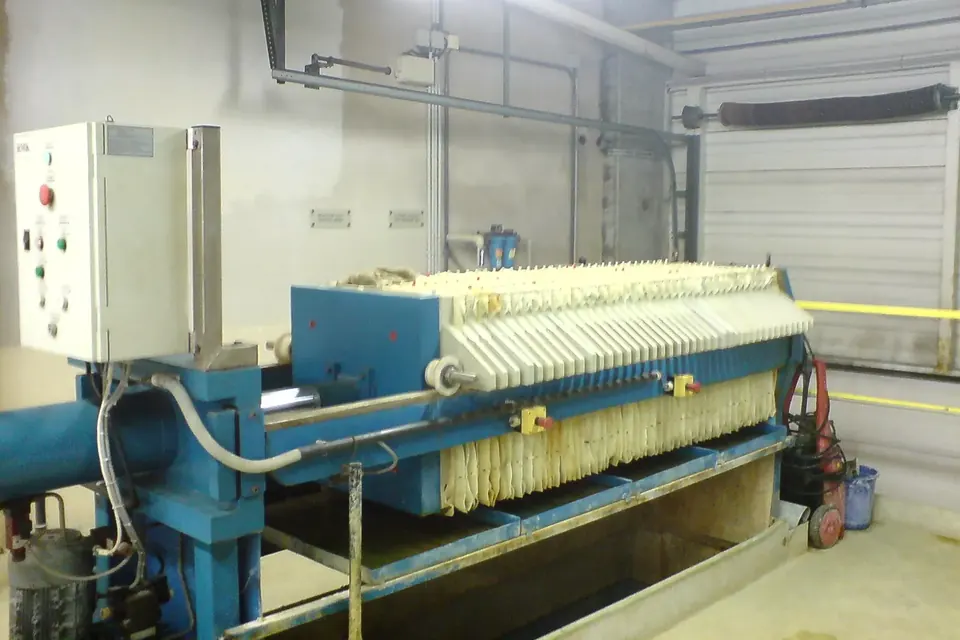 Slurry & Recovery
Why spent slurry is recycled
Cost, EU waste law and resource value: the case for reusing silicon carbide and glycol, and its limits.
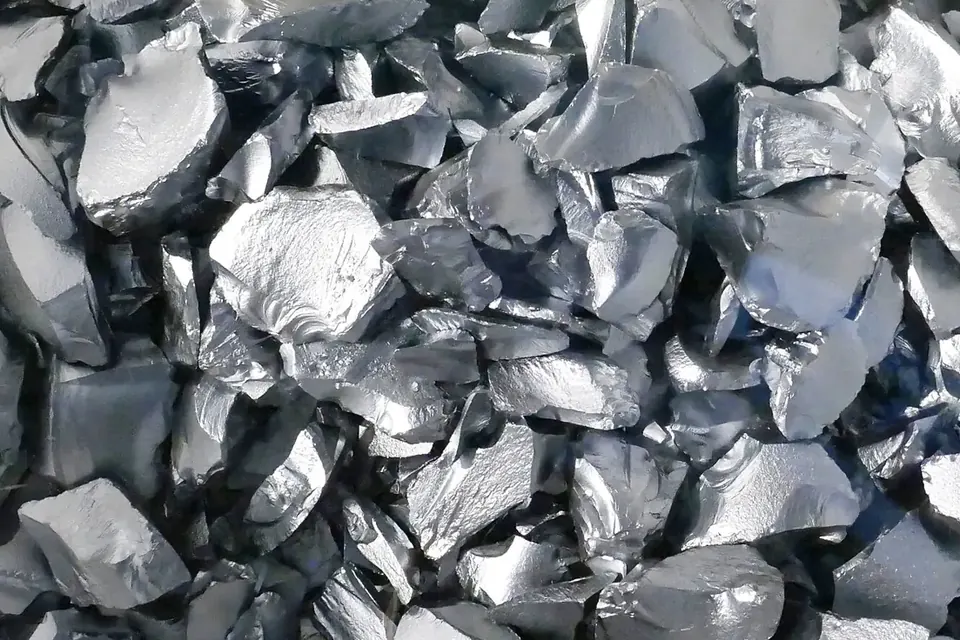 Industry & Policy
Critical raw materials and silicon
Silicon metal, gallium and germanium under the EU Critical Raw Materials Act: benchmarks, permits and supply risk.
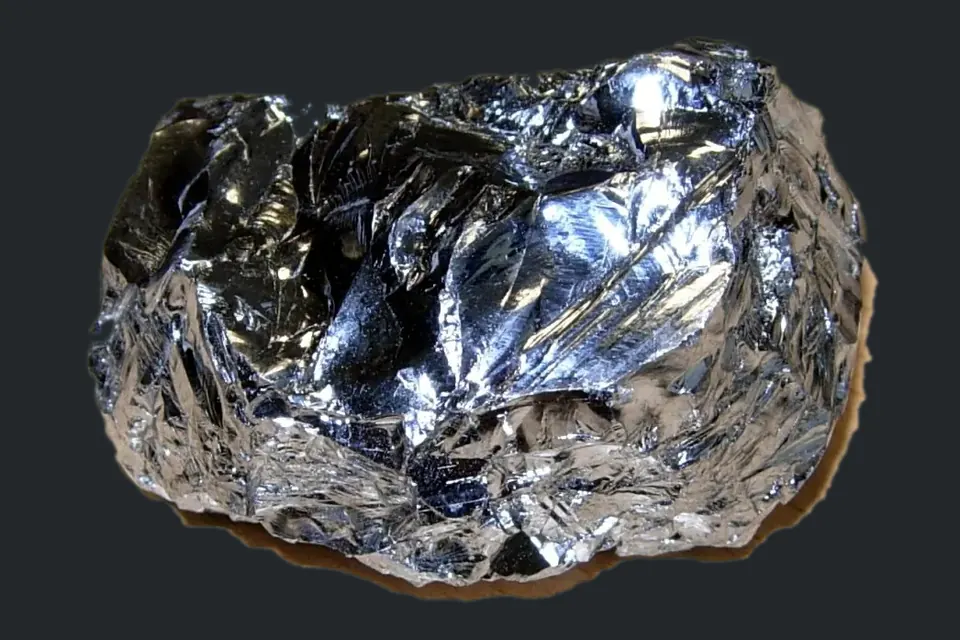 Slurry & Recovery
Kerf loss and silicon recovery
How much silicon is lost in the cut, why it is hard to win back and which recovery routes research describes.