Wire-saw slurry: silicon carbide, glycol and what each component does
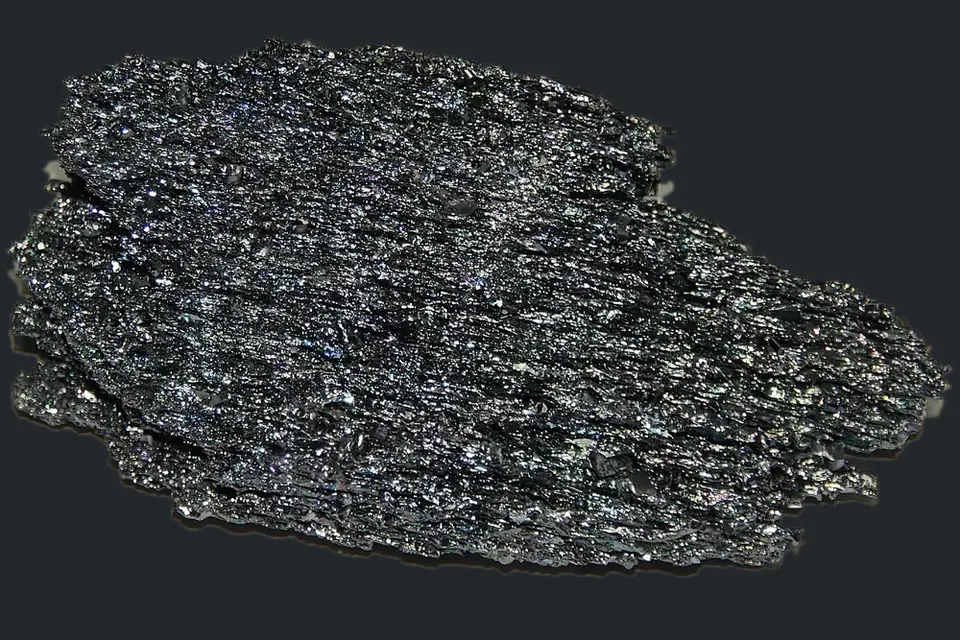
A sawing slurry is a suspension: hard abrasive grains spread through a viscous liquid. In classic wire sawing of silicon, those are silicon carbide (SiC) and polyethylene glycol (PEG). Each has a distinct job, and both change as cutting goes on.
The basic recipe
The literature consistently describes the slurry process as multi-wire sawing with steel wire and a slurry of polyethylene glycols and SiC powder. A conference paper from the Fraunhofer Technology Center for Semiconductor Materials (THM) names PEG200, a polyethylene glycol with an average molar mass around 200 g/mol, as the typical carrier (Kaden et al., 35th EU PVSEC, 2018).
| Component | Function | What happens in use |
|---|---|---|
| SiC grit | The actual cutting tool: grains roll in the gap and chip out silicon | Grains round off and fracture; the fine fraction grows |
| Carrier fluid (PEG) | Keeps grains in suspension, carries them into the cut, lubricates, cools | Takes up silicon fines, metal debris and water; viscosity drifts |
| Additives (recipe-dependent) | Dispersion, pH control, suspension stability | Consumed or diluted |
Silicon carbide: the grain
SiC works as an abrasive for silicon because it is much harder than silicon and fractures into sharp edges. Most of it is made by the Acheson process; see silicon carbide and the Acheson process. Slurries use micro grits, with median grain sizes from a few micrometres to a few tens of micrometres. The Fraunhofer experiment mentioned above used FEPA grit F800; the German edition explains these designations in its article on FEPA, ISO and JIS grit standards (in German).
The size distribution matters as much as the median. Oversize grains cause saw marks and can damage the wire; too many fines barely cut but raise viscosity. Shape counts too: angular grains cut better than rounded ones.
Polyethylene glycol: the carrier
PEG is a water-soluble liquid with low volatility whose viscosity can be tuned through chain length. For sawing it combines several properties:
- Suspension: its viscosity slows settling, so the slurry stays homogeneous in the loop.
- Transport into the cut: the moving wire drags a liquid film that pulls grains into the gap.
- Cooling and lubrication: the liquid absorbs frictional heat and cushions wire-to-silicon contact.
- Flushing: silicon fines are washed out of the kerf.
Viscosity has a cost. The Fraunhofer paper gives a dynamic viscosity of about 60 mPa·s for PEG200 at room temperature and notes that it raises shear forces in the sawing channel, and therefore machine power, as well as pumping energy. In four test cuts the authors replaced PEG200 with the less viscous propylene carbonate and measured roughly 60 % lower average main-drive power, with somewhat reduced cutting performance. It is a single experiment on multicrystalline bricks, but it shows how strongly the carrier shapes the process.
Water in the glycol
PEG absorbs water, and water lowers viscosity. Cutting-fluid patents describe both nearly anhydrous glycol formulations with a capped water content and deliberately water-containing versions whose viscosity is adjusted by adding water. In operation, water content is therefore a control variable to be monitored. There is also a safety angle: freshly exposed silicon reacts with water and releases hydrogen. The German edition covers this in its article on safety, waste law and REACH.
How the slurry changes while sawing
A freshly mixed slurry and one that has seen several cuts are different materials. Three effects overlap:
- Silicon builds up. All kerf ends up in the slurry as fine powder. In the Fraunhofer test, forces in the wire direction rose from cut to cut, which the authors attribute to the silicon load; after the fourth cut the maximum load of about 14 wt % silicon was nearly reached.
- Grit wears. Grains round off or break. A reprocessing patent describes particles of 5 to 10 µm forming over time from grains originally 15 to 20 µm in effective size (EP 2 274 767 A2).
- Metal gets in. Wear of the steel wire adds iron, partly attached to SiC grains.
As fines accumulate, viscosity and density rise, grit supply into the gap deteriorates and cut quality falls. At some point the slurry must be replaced in full or in part. What happens next is covered in why sawing slurry is recycled and how SiC and glycol are recovered.
What operators monitor
- Density: a simple proxy for solids content; the Fraunhofer test started at 1.57 g/cm³.
- Viscosity and temperature: closely linked, and they govern grit transport.
- Particle size distribution: reveals wear and the fine fraction.
- Water content: affects viscosity and hydrogen formation.
- Silicon content: limits how many cuts a batch can take.
Figures from single experiments and patents apply to the conditions described there.
 Slurry & Recovery
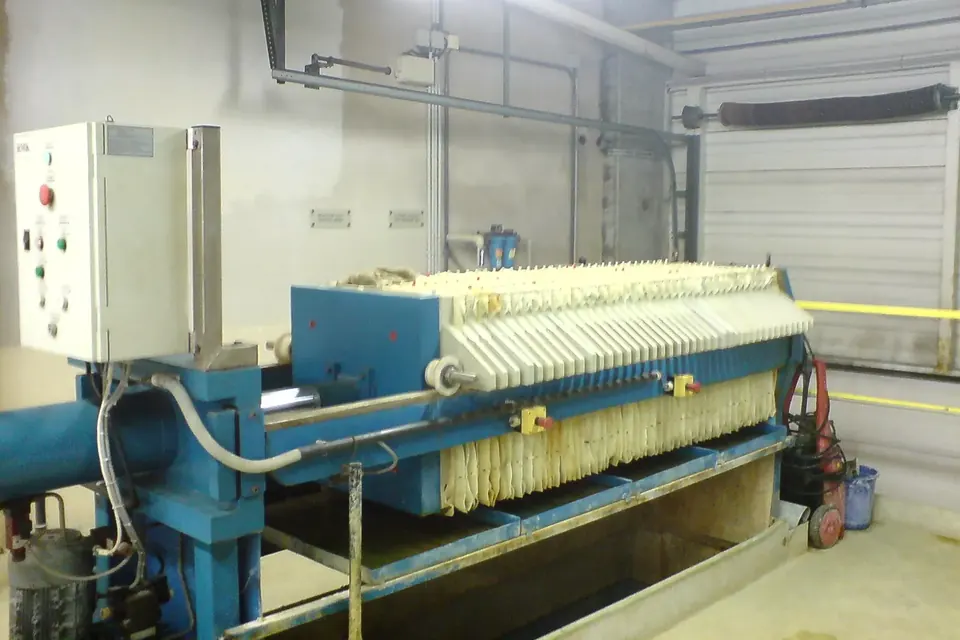
Why spent slurry is recycled
Cost, EU waste law and resource value: the case for reusing silicon carbide and glycol, and its limits.
 Slurry & Recovery
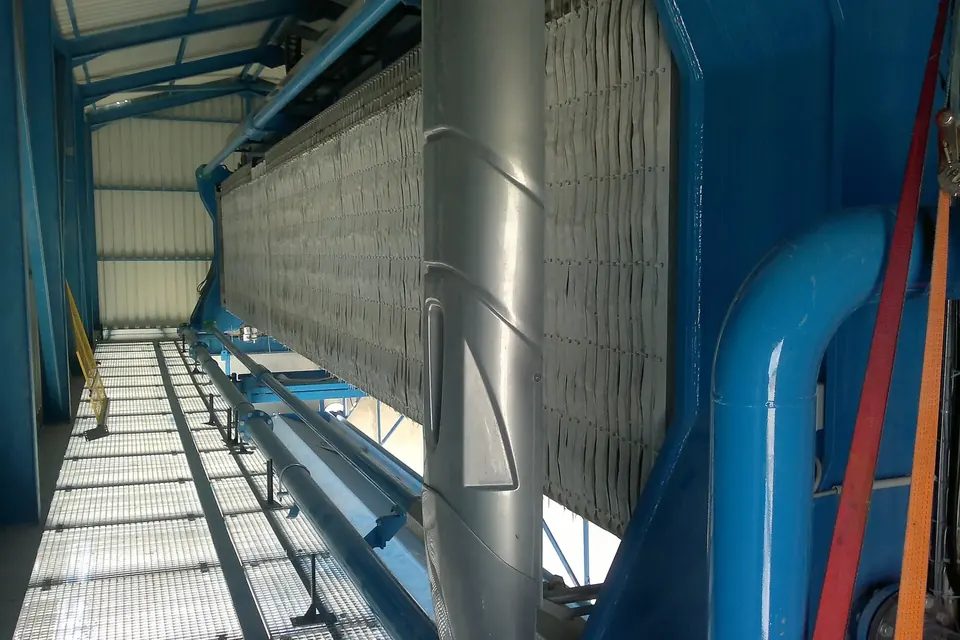
Slurry reprocessing, step by step
Centrifuges, hydrocyclones, etching and evaporation: the five basic steps of slurry recovery.
 Silicon Carbide
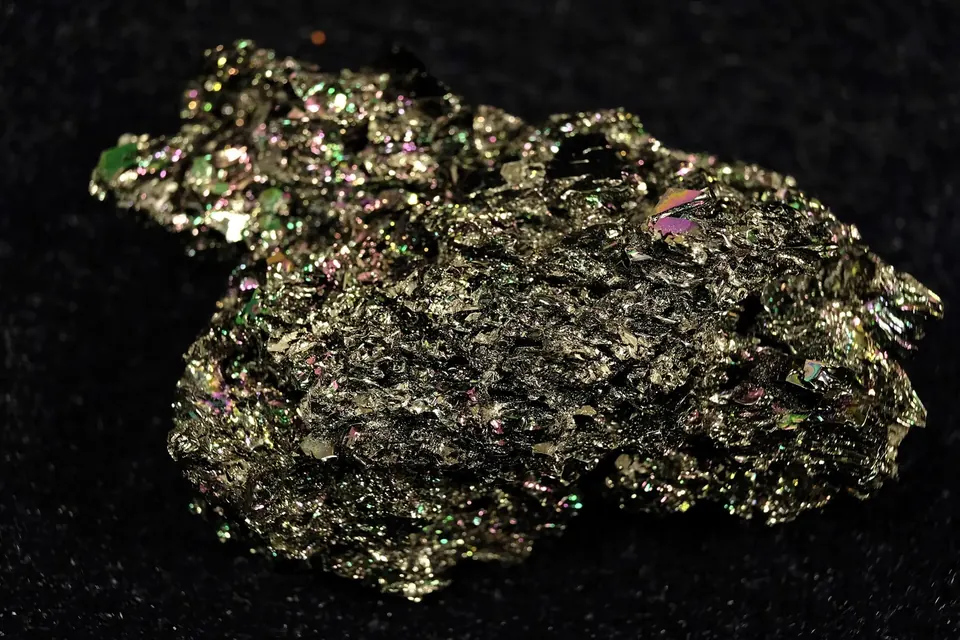
Silicon carbide and the Acheson process
From quartz sand and coke in a resistance furnace: production, green and black SiC, grit and uses.